Two instruments with similar names can differ in length, curvature, jaw pattern, tip profile, handle design and intended task. For a healthcare buyer, selecting surgical instruments is therefore not a matter of choosing the lowest-priced item from a list. The goal is to define the required function, confirm that the design matches the user and workflow, and evaluate how the instrument will perform throughout its usable life.
This guide is intended for hospital procurement teams, clinic owners, nursing homes and healthcare facilities sourcing reusable manual instruments. It is a purchasing framework—not clinical, sterilisation or regulatory advice. Qualified clinical and reprocessing personnel should approve the final selection and handling process.
1. Start with the Procedure and Task
Begin with the service or procedure, then identify the action required from each instrument: cutting, dissecting, grasping, holding, clamping, retracting, probing, dilating, suturing or dressing. Ask the clinical user to describe the tissue or material involved, required reach, visibility, access angle and preferred handling characteristics.
| Function | Common instrument families | Selection details |
|---|---|---|
| Cutting | Scissors, blades and specialty cutters | Blade profile, length, curve, cutting task and edge requirement |
| Grasping or holding | Tissue, dressing and specialty forceps | Tip shape, teeth or serration, grip and delicacy |
| Clamping | Haemostatic and specialty clamps | Jaw pattern, curve, length, ratchet and applied task |
| Retracting | Handheld and self-retaining retractors | Blade size, depth, profile, exposure and handling |
| Suturing | Needle holders and related instruments | Jaw surface, needle compatibility, length and handle control |
2. Compare Working-End Design and Dimensions
The working end determines how an instrument interacts with the task. Review tip width, tooth arrangement, serration direction, jaw length, blade geometry and surface profile. Then check overall length and curvature. A longer instrument may improve reach but can change balance and control; a different curve may help access in one setting and obstruct visibility in another.
Where practical, compare an approved reference instrument or evaluate a supplier sample with the intended users. Do not assume that products sharing a common name are interchangeable. Record every accepted characteristic so future replacement orders remain consistent.
3. Review Material, Construction and Finish
Reusable manual instruments are commonly made from suitable stainless steels, but the description “stainless steel” alone does not establish performance. Different instrument functions need different combinations of hardness, toughness, corrosion resistance and manufacturability. Request clear product and material information rather than relying only on broad marketing terms.
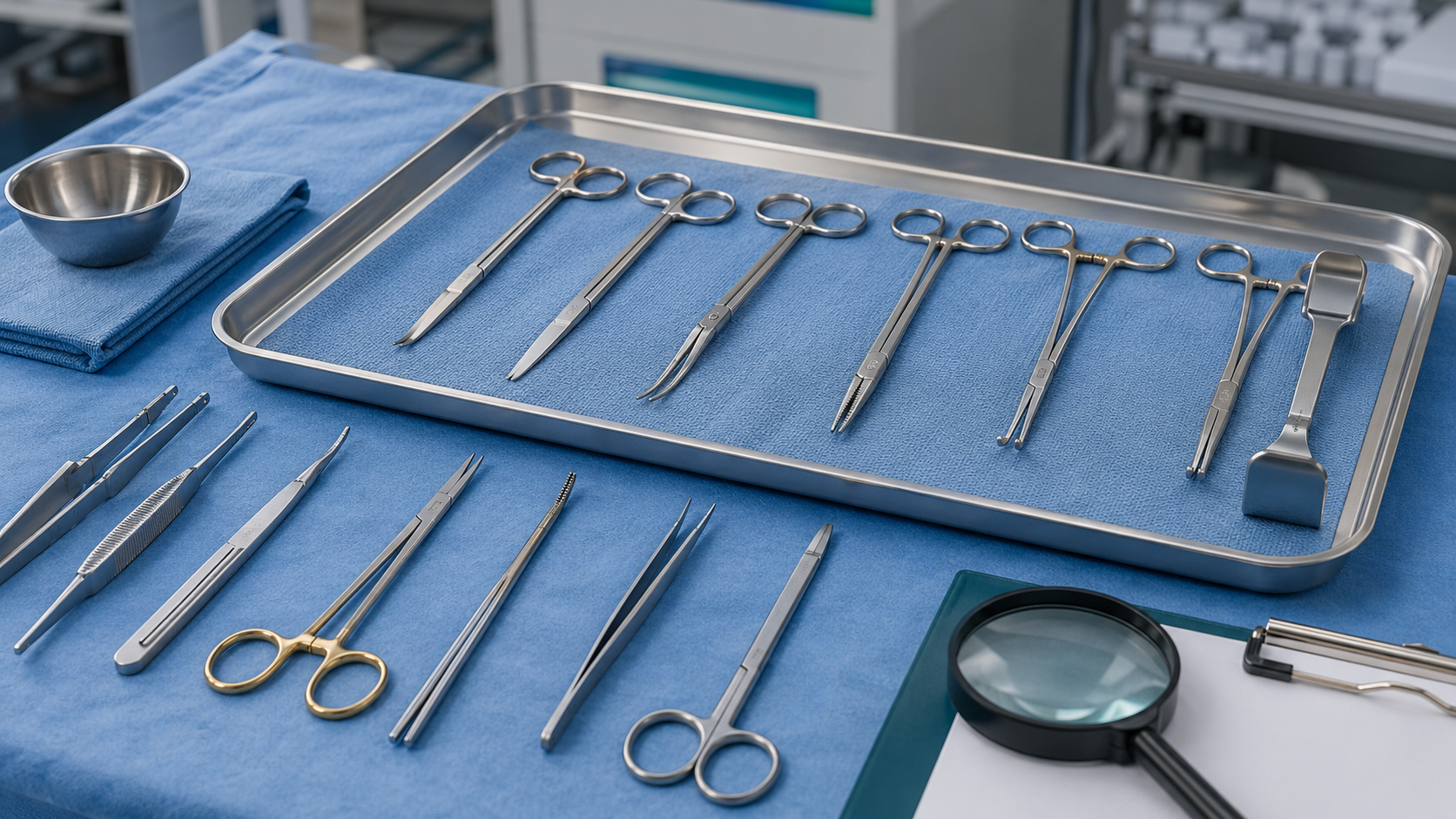
Inspect the finish under good light. Surfaces should be consistent and free from visible cracks, pits, burrs, sharp unintended edges, excessive roughness or poorly finished joints. Highly reflective and low-glare finishes have different viewing characteristics; the appropriate choice depends on the application and user preference.
4. Inspect Fit, Movement and Functional Consistency
A visual check is only the beginning. For hinged or ratcheted instruments, assess smooth opening and closing, jaw alignment, box-lock fit and ratchet engagement. Scissor blades should meet and move consistently for their intended cutting task. Forceps tips and clamp jaws should align appropriately when closed. Needle-holder jaws should be assessed for the specified needle and use.
Testing must follow the manufacturer’s instructions and the healthcare facility’s acceptance process. Avoid improvised tests that could damage an instrument or create unsafe assumptions. If several units are ordered, inspect a suitable sample across the batch for consistency rather than checking only one display piece.
5. Include the User in Ergonomic Evaluation
Handle size, ring shape, balance, spring resistance, weight and ratchet feel affect control and fatigue. A design that suits one user or specialty may not suit another. Involve representative clinicians and staff before standardising a high-volume instrument or set.
- Can the instrument be held and controlled comfortably with the expected gloves?
- Does the length provide access without reducing control?
- Are finger rings, handles and ratchets appropriate for intended users?
- Is the working end visible in the expected approach?
- Can the item be handled safely during transport and reprocessing?
6. Confirm Reprocessing Compatibility Before Purchase
Reusable instruments must fit the facility’s established cleaning, inspection, packaging and sterilisation workflow. Obtain and review the manufacturer’s current instructions for use with the responsible reprocessing team. Pay special attention to detachable parts, lumens, narrow gaps, delicate tips, insulated sections and complex joints.
Confirm that available equipment, accessories, water quality, detergents, packaging and validated cycles are compatible with the item’s instructions. Also consider whether staff can inspect all critical surfaces and whether trays protect fine working ends. If the facility cannot reliably process a proposed design, the purchasing decision should be reconsidered.
7. Standardise Sets Without Creating Unused Stock
Standard sets can simplify preparation, counting, replacement and training. However, copying a large traditional set may create unnecessary inventory, weight and reprocessing workload. Build the draft set from actual procedure requirements, then review it with clinical users and the sterile-services team.
List required tasks
Map each procedure step to the instrument function and approved pattern.
Review utilisation
Separate routinely used items from occasional backup and specialist instruments.
Agree quantities
Consider procedure volume, turnaround time, backup needs, loss and repair cycles.
Control changes
Give each approved set a version, item list and clear replacement reference.
Individual purchasing remains useful for replacing a damaged item, correcting quantities or meeting a justified specialist need. When mixing products from different suppliers, confirm that the resulting set remains practical for users, trays and reprocessing.
8. Compare Whole-Life Value, Not Only Unit Price
The least expensive quotation may cost more if instruments require frequent replacement, lack consistent patterns or create additional handling work. Compare the exact product, supplied documentation, warranty, availability of replacements, service or repair pathway and expected consistency for repeat orders.
Whole-life value also includes staff time, set weight, inspection difficulty, downtime, spare inventory and the availability of compatible trays or protective accessories. Use the same decision framework described in our medical equipment procurement checklist, but adapt the specification to instrument patterns and set control.
9. Prepare a Clear Surgical Instrument Enquiry
For each item, provide the recognised name, pattern, length, curve, tip or jaw detail, quantity and intended department. State whether the requirement is for individual instruments, replacements or a complete set. Add a reference code or photograph of an approved existing instrument only when it helps clarify the requested pattern.
When contacting surgical instrument suppliers in Chennai, ask the quotation to identify the exact offered pattern, size, material or finish information, manufacturer or brand, availability, warranty and supplied instructions. Alternatives should be clearly marked so clinical users can review them before approval.
10. Check Instruments at Delivery
- Match the instrument name, pattern, length, curve and quantity with the approved order.
- Check identification markings and supplied product documentation.
- Inspect finish, working ends, alignment, joints and ratchets under appropriate lighting.
- Assess movement and function using the approved inspection method.
- Record shortages, damage or substitutions before the items enter routine stock.
- Follow the facility’s acceptance and reprocessing procedures before clinical use.
- Add accepted instruments to the set list, inventory or traceability process used by the facility.
Frequently Asked Questions
What information is needed before buying surgical instruments?
Prepare the procedure or task, instrument pattern, size, curvature, working-end design, quantity, reusable or single-use requirement, compatible reprocessing method and any required documentation. The final selection should be confirmed by qualified clinical and reprocessing personnel.
How can buyers compare the quality of reusable surgical instruments?
Compare the exact model and intended use, material and finish information, working-end alignment, joint and ratchet movement, edge performance where applicable, identification markings, supplied instructions, warranty and sample consistency.
Should healthcare facilities buy individual instruments or complete sets?
The choice depends on procedure volume and existing stock. A validated standard set can improve consistency, while individual purchasing is useful for replacing damaged items, correcting set quantities or meeting specialist preferences without duplicating unused instruments.
What should be checked when surgical instruments are delivered?
Verify the item name, pattern, size, curvature, quantity and supplied documentation. Inspect surfaces, tips, jaws, alignment, hinges, ratchets and cutting action as applicable, and follow the facility's acceptance and reprocessing procedures before clinical use.
Preparing a Surgical Instrument List?
Send Sakthi Pharma Surgical the required instrument names, patterns, sizes, quantities and Chennai delivery location for an availability-based discussion.
Send Your Instrument List